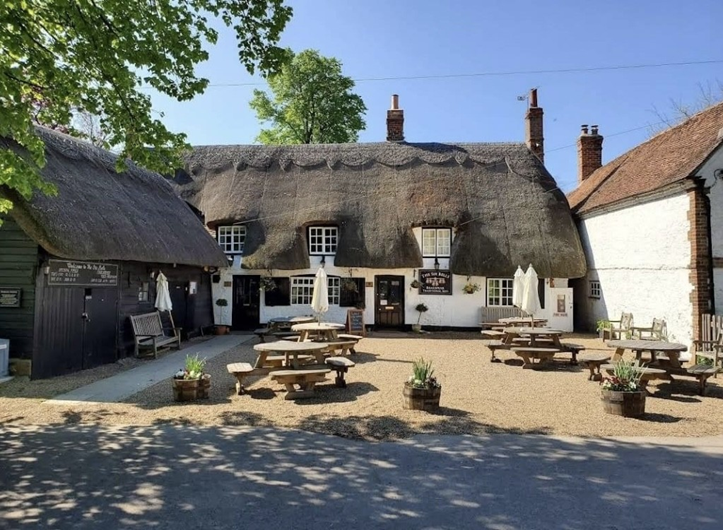
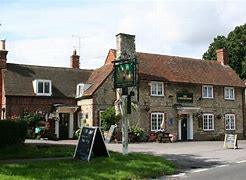
Warborough and Shillingford are known to have had six public houses and inns. The earliest recorded was the Six Bells, situated on the Green. Shillingford had its own brewery in Warborough Road and there was at least one malt house in Shillingford. Many households brewed ale for their own consumption and at times, for their neighbours. Beer and ale were distinct products; beer was brewed with the addition of hops, whereas ale was not.
From 1552 onwards, local justices of the peace were empowered to issue licences for the sale of ‘beer and tipples’ (spirits). Publicans were required to nominate two sureties, who acted as guarantors of the licensees good character. These sureties could forfeit their bond if a publican was charged with misconduct. This might include disorderly behaviour, illegal gaming (such as quoits, bowls, cards, dice, football or tennis) or opening outside permitted hours. Extracts from the Victuallers’ Licences of the Watlington Petty Sessions, and records held within the Oxfordshire History Centre, reveal that many publicans within the Parish stood surety for each other. The exception to the list below is John Binham, who had recently moved from Aston Rowant, and had taken over the Six Bells. Both of his sureties were also from Aston Rowant.
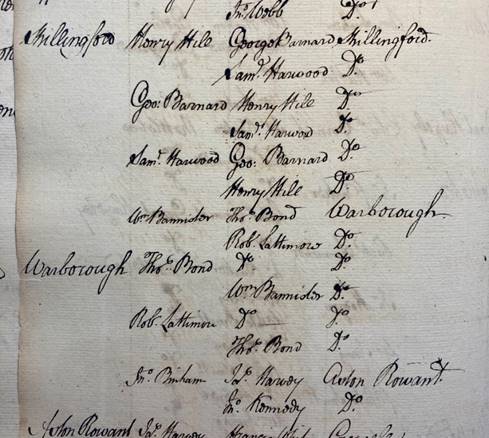
Extract from the 1778 Watlington Victuallers’ Licences
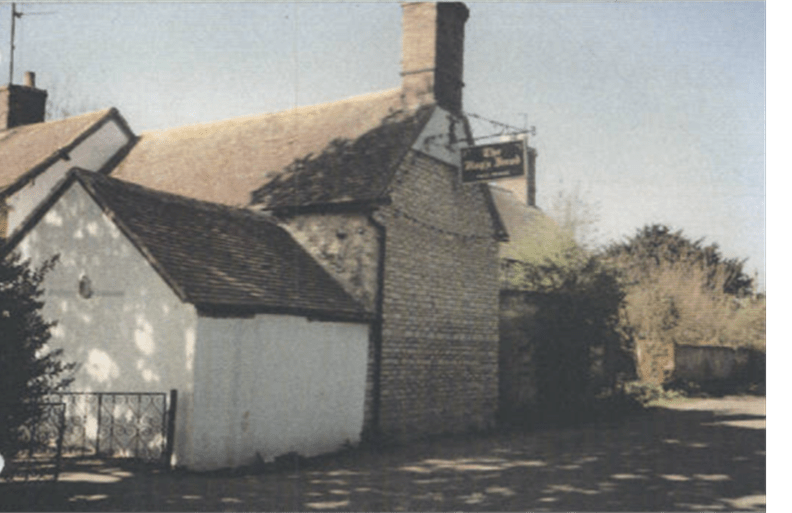
For example, Thomas Bond, of the Nag’s Head (later known as Nelly’s) stood surety for William Bannister (New Inn, now Kingfisher) and Robert Lattimore (who was probably an un-named beer house in Warborough).
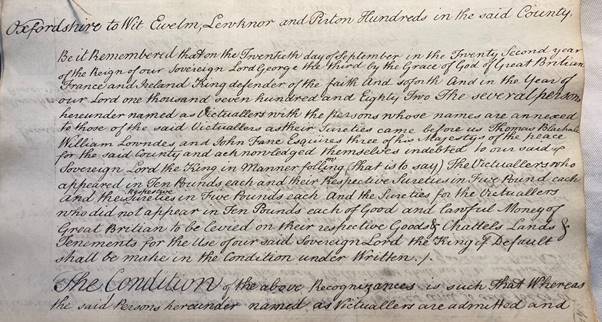
Extract from 1782 Victuallers Licenced giving conditions for sureties
The public houses of the Parish were not named individually in the records of the Watlington Victuallers Licenses until 1822. Oxford and Thame, however, were recording the ‘signs’ of public houses during the 18th century.
These laws were repealed in 1828 when bonds for the licensee were no longer a requirement.
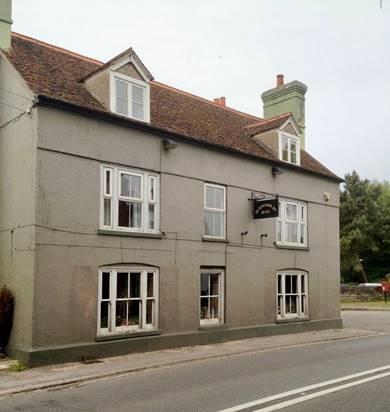
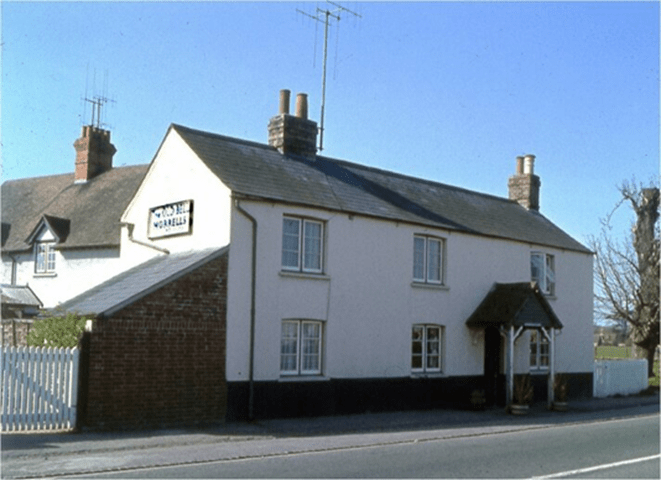
Although Warborough has always been the larger village by population, Shillingford’s position on the main road from the west and from Oxford leading on to Henley and London encouraged the development of three inns: the Old Bell, the George & the New Inn. Situated along the Thames, these establishments also benefitted both commercial traffic and later, tourism.
As the Thame Road developed and the road north of Hammer Lane was improved to accommodate heavier traffic, the route between Aylesbury to Reading became increasingly important. At Wheeler’s End, the construction of New Road in the mid 1820’s, created improved access for coaches and wagons using Shillingford Bridge, allowing direct access without road tolls. The Old Bell (since demolished and is now the site of the Shillingford Roundabout) would have benefited significantly from the development, being located serving both the London – Oxford and Aylesbury – Reading routes.
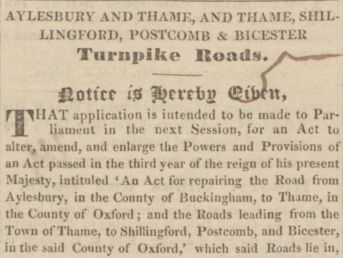
Oxford Times, 1832, Improvements to Thame Road
Many houses brewed their own ale and beer largely because fresh water was not always readily available. Licences were granted to ale houses, beer houses, public houses, inns and taverns, each serving a distinct role. Ale. Unlike beer, was brewed without hops, and brewing was generally undertaken by women within the household.
Public houses were initially defined as establishments providing alcoholic beverages for consumed on the premises. Taverns typically offered food as well as drink, while inns provided accommodation and stabling for travellers’ horses. Some inns also had arrangements with coaching companies, maintaining horses after they had been changed enroute.
Census records and trade directories, show that many licensees supplemented their income through additional occupations, such as butchers, carpenters and coal merchants. Women frequently appear as licensees, often following the death of their husbands.
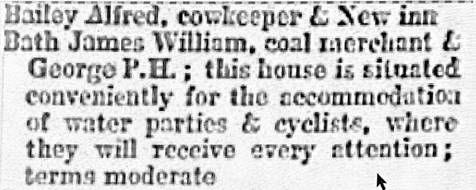
Extract from Kelly’s Directory, 1895, Alfred Bailey & William Bath both had second incomes
Over the past century, most of our Parish’s pubs have ceased trading, leaving only the Six Bells, on the Green, still operating. Rising costs, stricter drink-driving laws, and declining customer have made running of a public house increasingly challenging.
Please click on a Public House:
Researched by David Seymour, January 2026