Theodore Ernest King, Theo, was the village postmaster for 41 years and it is often quoted that the Post Office at Warborough was in the same family for 147 years but research has been unable to confirm this.
Theo was born in Long Wittenham on 17th July 1919 and a family story goes that Jane Beisley, his aunt who lived in Warborough went with her son Percy and collected Theo in a pram when he was just a few months old and he never returned.
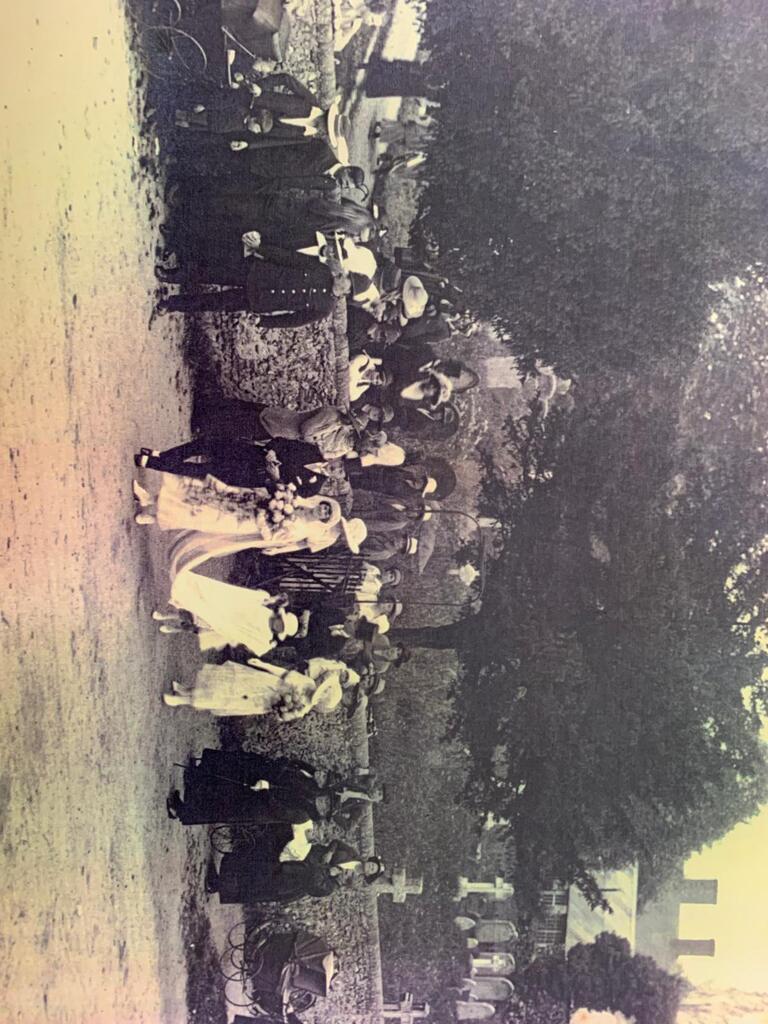
Little is known about the young Theo but it would appear that he received a better education than many of his peers.
Jane was living in The Old Cottage in 1939 with Theo’s occupation being a Chartered Accountant Clerk. During the war he was a Warrant Officer, employed as Chief Clerk to Production Group R.E. and on applying for the post of Post Master at Warborough his Commanding Officer says:
“…at all times he has carried out his duties in a highly efficient manner. It is due to his tact and initiative that this Group has operated so smoothly and during difficult periods he has worked long hours cheerfully and without complaint.
Of a pleasing personality and conscientious disposition, he can be relied upon to work without supervision and to deal with difficult situations when they arise. The standard of his work is first class, and at all times he has kept firm control over his office staff.
His conduct has always been Exemplary and I have no hesitation in thoroughly recommending him to anyone who requires the services of a loyal and dependable employee.“
Since the death of former postmistress Kate Baker, Lesley Louisa Beisley a former servant of the Bakers had been managing the Post Office. There appears to be no family connection between the Bakers & Miss Beisley.
Theo took over the Post Office on 3rd June 1948 just a week or so after his discharge from the Army.
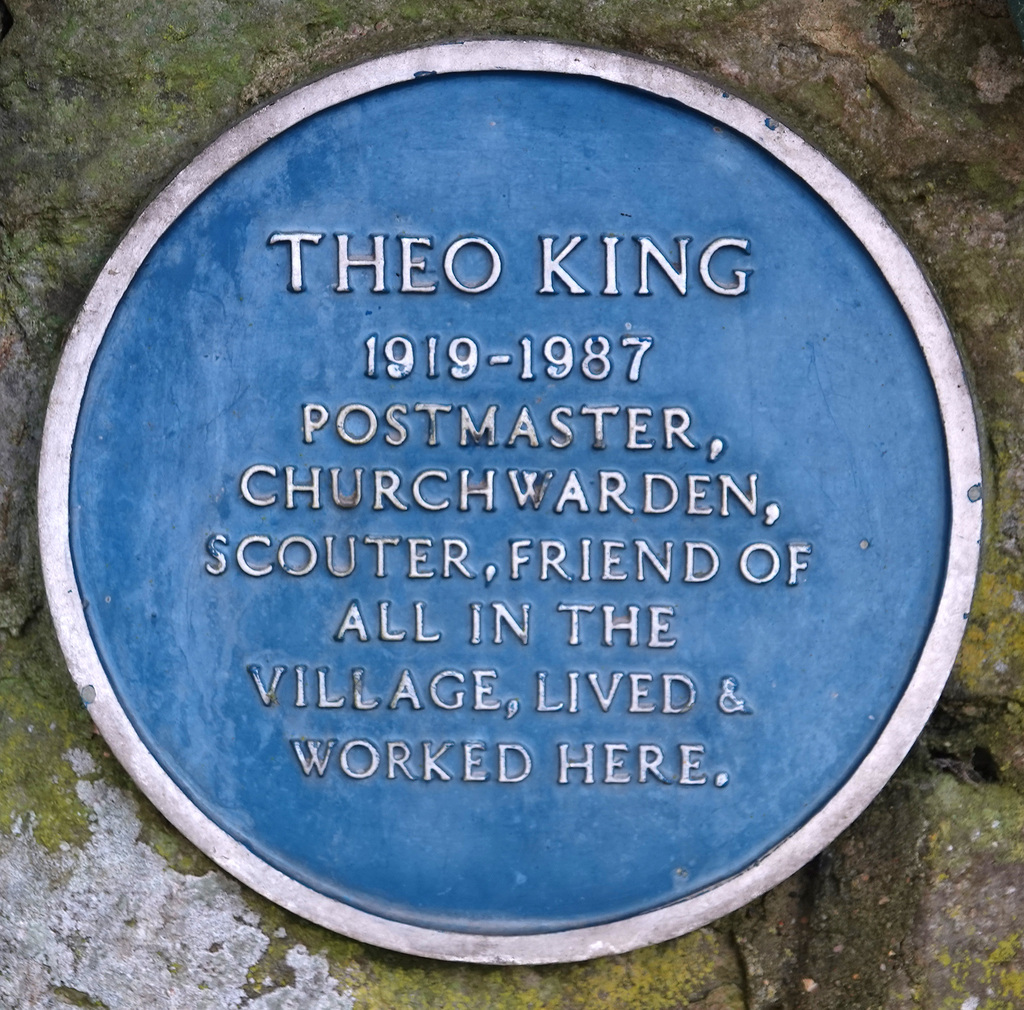
Theo was an active member of the Parish, not only by providing the services of the Post Office but as a Churchwarden, Scoutmaster, School Governor, where he kept meticulous minutes and, when eligible, a member and treasurer of the Silver Threads and of course, a friend to many.
Day by day, year in and year out, with hardly any holidays he served the village not only in the Post Office but also making time for the church.
As Churchwarden he saw out many a Vicar and was a member of the Choir.
Rodney Attwood writes:
“I was a member of the 1st Warborough Scout Troup under Theo King and Tom Bullock and was chosen to represent our district at the World Jamboree in Austria in 1951. We went on several summer camps, and I remember going to Thame Park (it rained) and North Devon and to Bosham. I certainly remember all the camps with a great deal of pleasure. I also sang alongside Theo in the church choir for several years.
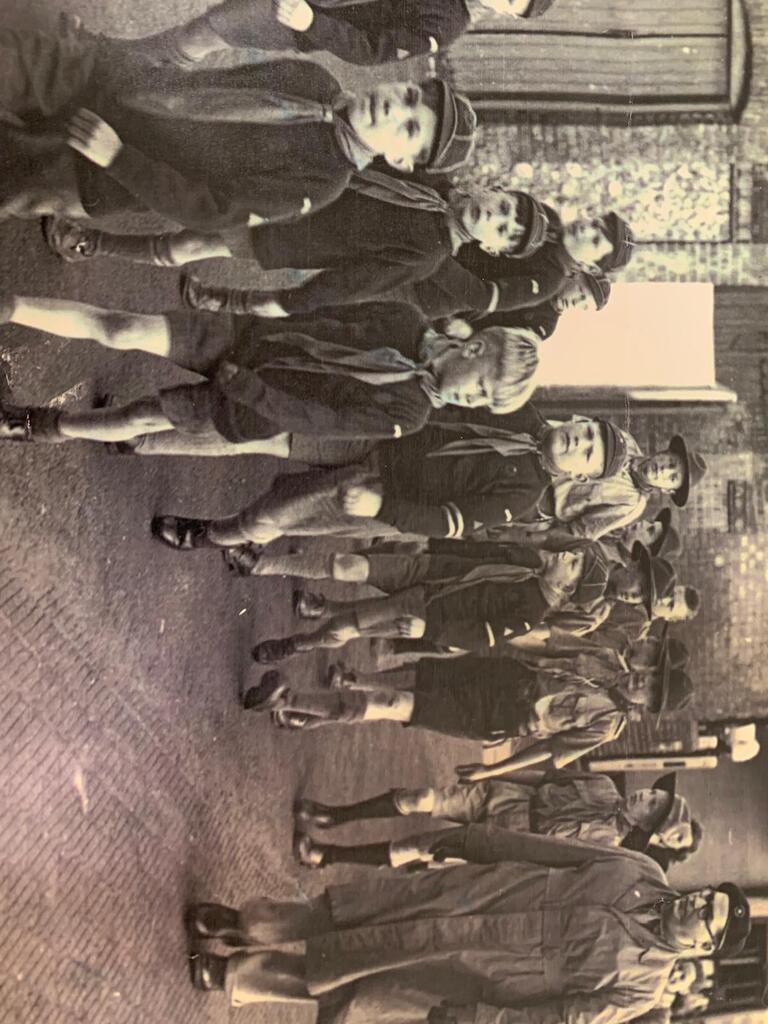
Theo was summoned to Windsor Castle for an audience with the Queen to receive a high scouting award. Usually, he managed little items of needlework himself but on this occasion a new uniform was ordered and the request went out to a friend ‘Will you please sew all my badges on my new uniform?”
When the hospital car scheme began in 1966, he held a copy of the drivers rota and was able to liaise between the drivers and those requesting a lift.
Theo loved the parish, not just the two villages but also the surrounding countryside. He recorded vanishing hedges and walked the footpaths to keep them open.
Theo suffered ill health after open heart surgery in 1982 and died on 7th November 1987. There was no standing room left in the church at his funeral, and St Laurence Hall, to which the service was relayed was full too.
His many friends and the surgeries and hospitals who served him benefitted with bequests in his will.
Following his death memories of Theo flooded in and extracts from these reflect the way many remembered him –
‘Theo liked to entertain and had a reputation as being a very good cook and would produce lunchtime meal for friends – a full roast of beef, three vegetables followed by souffle and coffee while at the same time carrying out the business of the Post Office.’
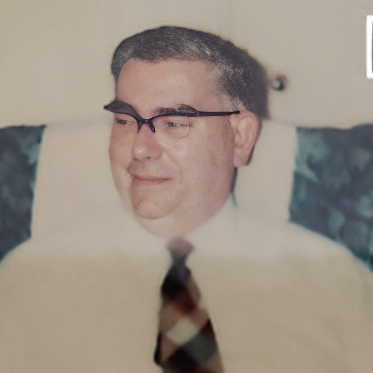
Someone who shared 20 Christmases’ with Theo wrote:
‘Invitations were sent out to any friends who he knew would be on their own for lunch. After a good lunch and later in the day after a cup of tea and cake Theo would open his presents from the villagers and they generally numbered around 150 – anything from a tin of soup up to much larger presents from families. This took several hours but the day was not done and we then went back to the dining room for a cold supper. A cook, a chef and cordon bleu – for the knights of his round table’.
A George IV dining table was left to his Goddaughter in his will.
‘My memories are of much kindness and innumerable services far beyond his official duties, but above all the delightful conversations’
‘If Mr King said it had to be done, – it had to be done. He got his own way – well nearly always.’
‘He was like the wise old owl in the proverb in that he heard a great deal and closely observed all who passed his perch; but unlike that bird he was far from silent.’
‘He felt warmly for the handicapped and the underdog…’
‘Like a kindly parent, genial and encouraging but sometimes impatient and stern.
Humphrey Case wrote:
He had a sharp sense of humour, and I think he has the last laugh on us. He found much cause for amusement in proposals from time to time to put up memorials in the village. Now there are suggestions for no less than three!
The memorials for Theo, all paid by public subscription, included a wooden eagle originally placed in St Laurence Hall but removed when a refurbishment took place.
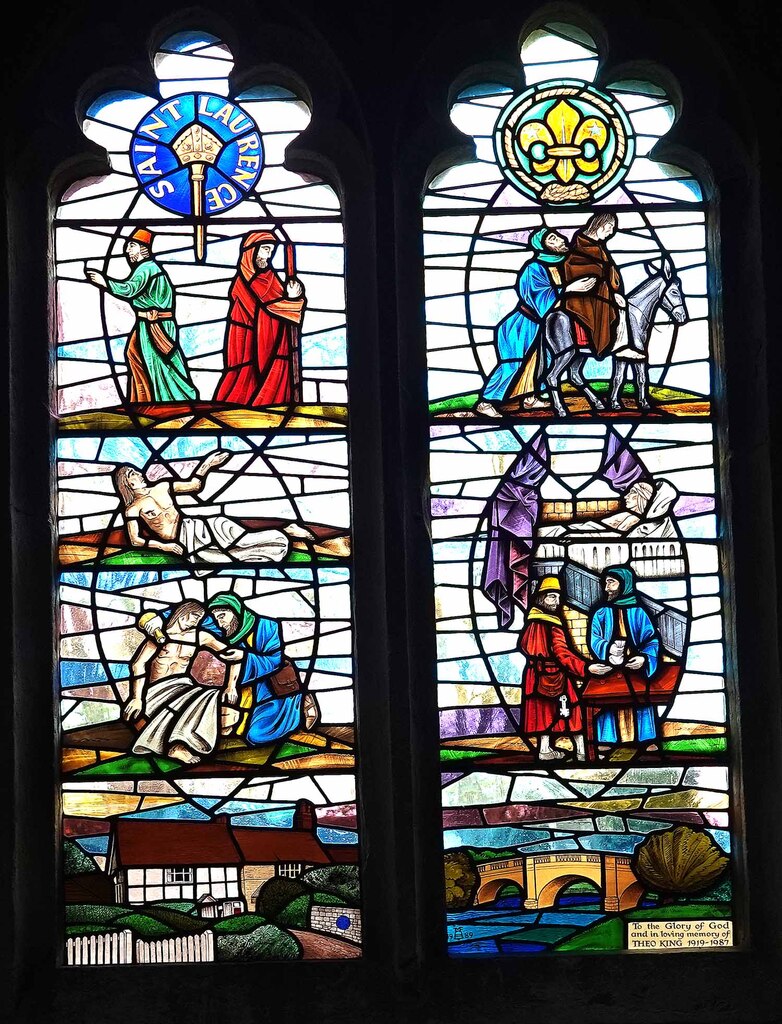
Basil Deed wrote:
‘When the Warborough & Shillingford Society was founded in 1970 he came to the founding meeting in the Greet Hall and has always supported it. At the same time, I have always felt that he did have some reservations about the society (I have always felt the name was slightly presumptuous) and he did not like Organisation with a big ‘O’.
Compiled by Lynda Raynor